As a business, we have committed to having a more holistic approach towards embedding sustainability into our business model for some time. This has only been given further impetus by COVID and the growing recognition – from all quarters – that things cannot continue as they are, from both an environmental and societal perspective.
Even the most hardened climate-sceptic would struggle to ignore recent announcements from some of the world’s bastions of capitalism, committing to doing things differently. These include asset managers, such as Black Rock, pushing the companies in which they invest (worth $8.7 tn) to commit to achieving net zero emissions by 2050 and some companies – such as Microsoft – going even further, by committing to achieving net zero by 2030.
For a small business such as ours, the challenge is how to do so in a way that reflects the nature of our work, would not undermine short-term business resilience and allows for the incremental change in mindset required to have a meaningful impact.
The basis
Firstly, we needed to consider the best approach to adopt. There are several different options, such as:
- Signing up to existing and recognised accreditations, such as B-Corps.
- Employing a consultant to guide you through the process.
- Developing your own approach and learning as you go.
Following a review of the options, we adopted the latter, based on the scope for self-reflection, ownership and cost-efficiency. We then had to decide on an appropriate framework for setting targets and monitoring progress. Given its holistic nature, widespread adoption across different levels of government, institutions, charitable bodies and increasingly the private sector, alongside growing recognition in the built environment sector, we opted for the UN Sustainable Development Goals (SDGs).
What are the SDGs?
The UN SDGs frame the agenda for international cooperation in working towards sustainable development. With a target date of 2030, they are applicable equally to developed and developing countries, and public and private sectors. They comprise 17 goals, supported by a total of 169 targets, against which progress is being measured. They cover a wide range of issues, from gender equality, health and wellbeing, to poverty, climate action, marine conservation, partnerships and justice.
The targets include providing affordable housing; developing sustainable transport systems; safeguarding cultural and natural heritage; reducing impacts from natural disasters; reducing the environmental impact of cities; providing safe, inclusive and accessible, green and public spaces; strengthening national and regional development planning and increasing the number of cities with integrated policies and plans. Many others also relate directly, or indirectly, to how we manage the built and natural environment.
Given our multidisciplinary nature and the breadth of the work we undertake – both in the UK and overseas – the SDGs are a good fit for us.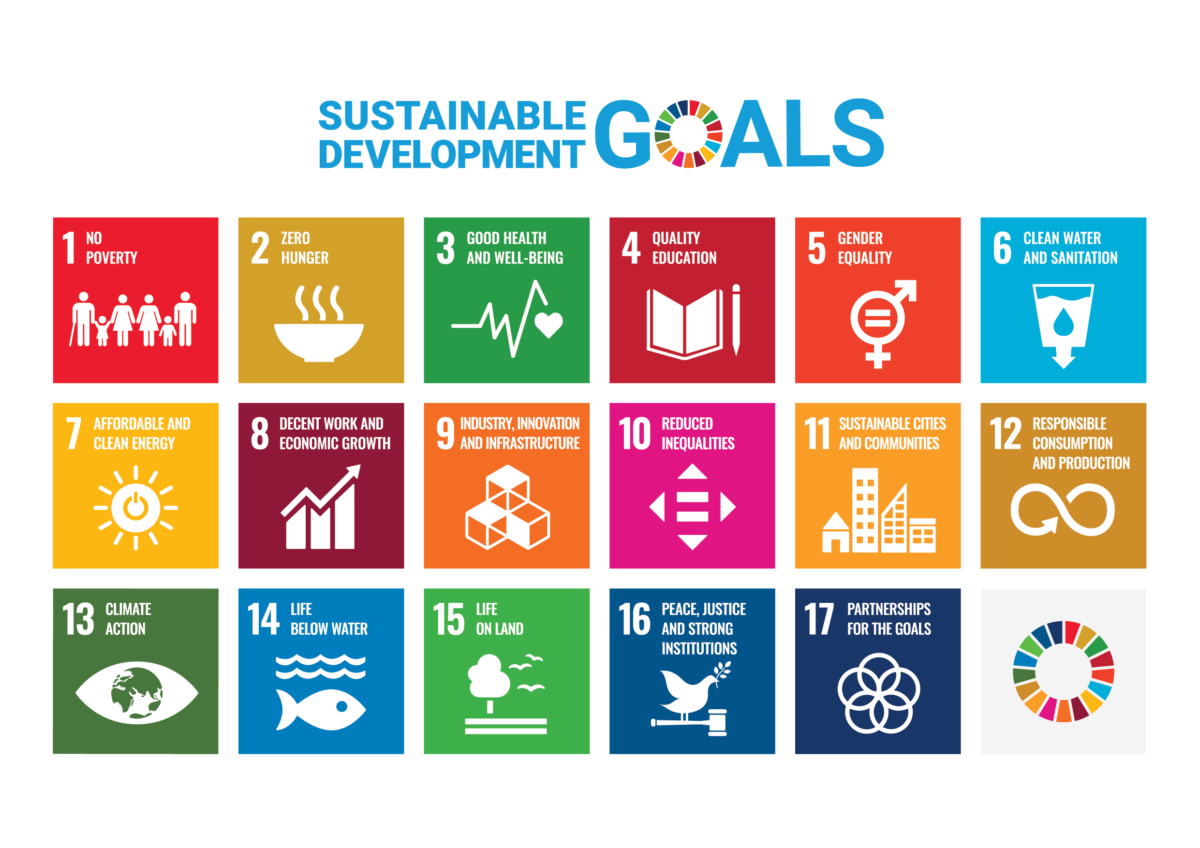 The process
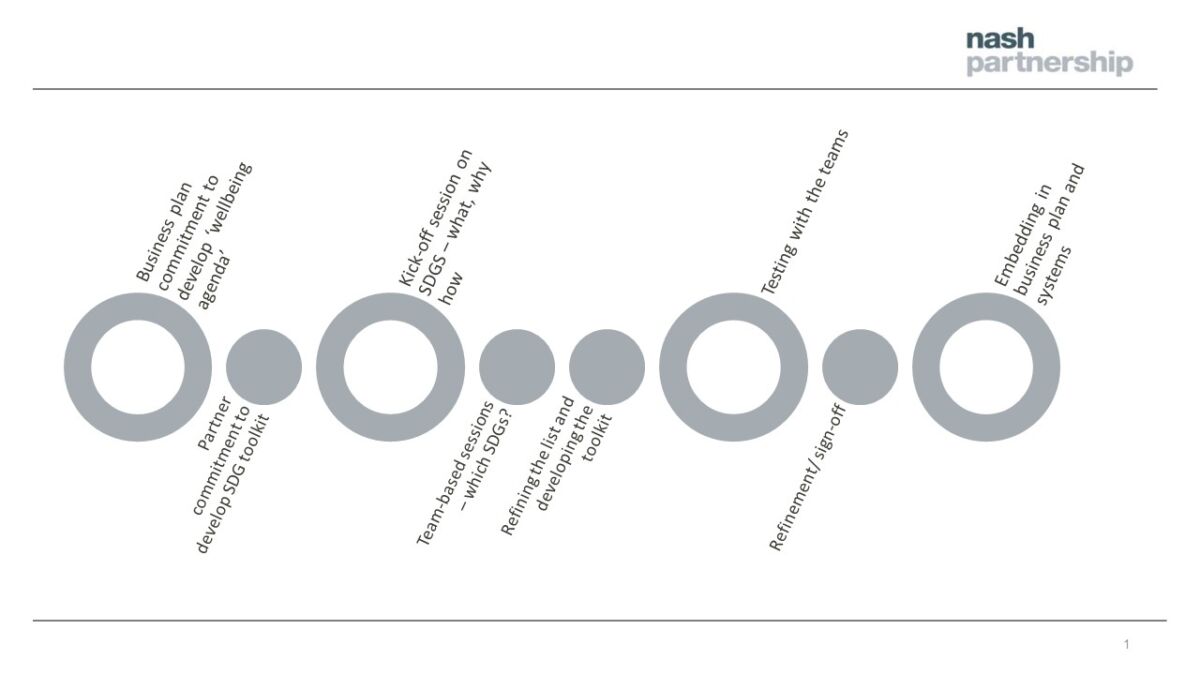
Securing Partner-level commitment is fundamental to effecting behaviour change throughout an organisation, so this was the first step. This ensured the brief was sufficiently focused, the process was efficient and buy-in was assured from all levels of the business.
This was followed by a practice-wide workshop, encompassing the entire staff. At this session we explained the SDGs, explored how they were reflected (or not) in our respective institutions’ work and how other companies of varying sizes have built sustainability into their business models. Through break-out sessions, we then discussed which goals we felt were most relevant for us. We felt early on that trying to adopt all 17 would be unwieldy, difficult to implement and potentially, therefore, self-defeating.
This was followed by separate, more focused discussions across the different service areas of our business – Planning, Regeneration and Urban Design; Existing Building Re-use (including Heritage and Conservation); New-build Architecture; and Operations. This gave rise to a more focused list of SDGs that we felt were more relevant to our day-to-day project work and operations. This list was further refined to a final list of six, through further discussions with partners and internal task groups, including our Wellbeing and Green Strategies Team.
The final list
Our final list comprised:
- SDG 3: Health and Wellbeing
- SDG 7: Affordable and Clean Energy
- SDG 10: Reduced Inequalities
- SDG 11: Sustainable Cities and Communities
- SDG 12: Responsible Consumption and Production
- SDG 15: Life on Land
This was then developed into a Framework for Change against each SDG, including a ‘statement of change’, a series of principles to be applied to external practice and a series of projects to be undertaken to change internal operations and behaviour. This resulted in a Toolkit comprising:
- A Project Checklist to evaluate performance against each of the six SDGs – both at the beginning and end of a project.
- A Business Operations Project List, with a range of projects laid out to help us enhance our operational performance against each of the six SDGs. These include a range of issues, such as recruitment policies, staff social activities to improvements to the office working environment.
The Toolkit
It was concluded that the Toolkit should be a ‘living’ suite of documents, which can evolve as we use it, particularly in the first year of operation. This was then subject to a second round of testing across the service teams, to ensure the final product will balance aspiration with application. This enabled us to explore the finer points of applicability, scalability, and the assessment process for projects; and which operational projects were of the highest priority.
This provided the basis for the further refinement and completion of the Toolkit. A guidance note was then prepared, explaining the purpose, applicability, assessment process and approach to monitoring the implementation of the toolkit.
The final step has involved embedding the Toolkit into our office systems. So, now for the small matter of delivery and, ultimately, realising change. In the face of the complex challenges this planet of 7+ billion people are facing, some might ask ‘what difference will the actions of 30 people make?’. But, to borrow from JF Carney, “little drops of water…make the mighty ocean”.
So now it is time to walk the talk.
The content of this publication has not been approved by the United Nations and does not reflect the views of the United Nations or its officials or Member States.