The Government’s decision to press ahead with allowing properties in commercial, business and service uses (new Use Class E, including retail, cafes/restaurants, offices, light industrial, research and development, financial services, health centres and gyms) to change to residential without the need for planning permission is controversial and has attracted strong criticism, as well some support. This will be a new Class MA permitted development right and is subject of a prior approval process that enables local planning authorities to consider a limited number of potential planning impacts. It should also be noted that all dwellings now created under permitted development rights must comply with national space standards.
The new permitted development right is billed as part of ‘a package of measures to revitalise England’s cherished high streets and town centres’. Will it help achieve this?
The role of town centres
Town centre living is certainly an important element in recasting the future role and purpose of our town centres. So too is an approach that is bottom up and both engages the input of local stakeholders and capitalises on the energy and ideas that this can generate. To this end, many towns have received funding from the Government’s Future High Streets Fund and Towns Fund.
The concept of revitalising town centres through investing in local communities to embrace and stimulate change envisages this ‘social reconstruction’ as the basis for generating and attracting economic investment and activity. The Portas report and other studies conclude that town centres need to come up with ideas and initiatives for building social capital themselves, in ways that are tailored towards their specific circumstances, and which can be taken on by stakeholders as their own responsibilities and driven using local passion, knowledge and interests. An important element in these locally driven strategies will be bringing in new uses and activities and often, as part of this, introducing or increasing town centre living.
New permitted development right and local aspirations
Proposals for residential conversions of town centre properties, through permitted development, may align with locally developed regeneration strategies. But it seems inevitable that there will also be situations where permitted development proposals are seen as weakening locally led initiatives and the sense of stakeholder influence over the places at the heart of their communities. This could be avoided of course, through dialogue over the use of permitted development change of use and how it can assist with local aspirations for town centre regeneration. However, there is no requirement to do this.
The importance of vitality
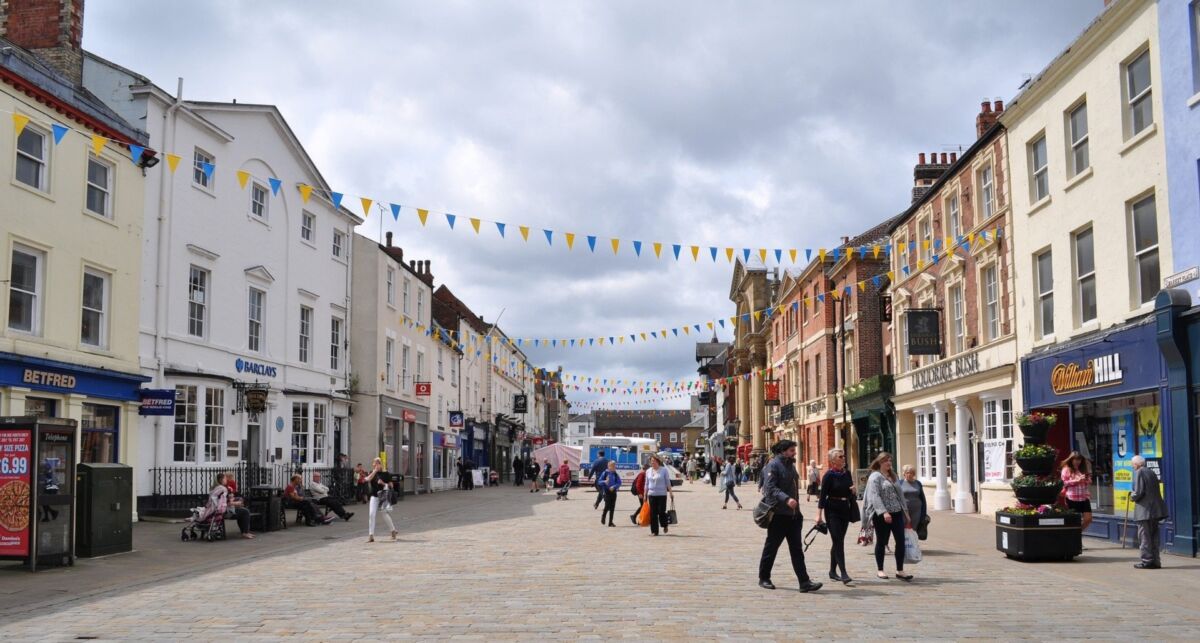
Residential conversion of vacant town centre premises can provide new homes in sustainable locations for buildings that would otherwise struggle to find a use, bringing new activity and vitality to centres. But, it is important that the ability to create new homes and the financial value that this can generate, does not squeeze out other uses that are important to the vitality and resilience of reimagined town centres. The recent announcement of the University of Gloucester’s proposal to convert the former Debenhams department store in Gloucester into a teaching campus, bringing new activity and energy to the city centre, is a case in point. Some protection is provided in this respect in that the new permitted development right does not apply to change of use of more than 1,500m2 of cumulative floorspace within a building. However, it would seem that there is a significant risk that local initiatives for enterprise, cultural or community projects in smaller buildings might be lost to the higher values that can be generated through permitted development residential conversion.
Opportunities – and consequences
It is also the case that, despite the focus of the ministerial announcement on regenerating high streets and town centres, the right to change from Class E uses to residential applies everywhere, subject to some exclusions, such as listed buildings and National Parks. This too presents opportunities but also the potential for unintended consequences, such as new homes in locations lacking the ingredients that help create successful communities, including schools, health facilities, affordable housing, parks and play areas.
Amongst the commentary, much of which has focused on the loss of local control over the future of town centres and High Streets, little has been said about the impact on the existing permitted development right (Class O) for change from office to residential use. The new permitted development Class MA will replace Class O and introduces the 1,500m2 floorspace limit, which hitherto has not applied to office to residential change of use. Whether this significantly affects office to residential changes of use remains to be seen – it seems likely that most of the larger scale opportunities have already been taken up. Any limiting effect is also potentially offset by a change to the qualifying period, which again has attracted little comment so far. Whereas Class O required buildings to have been in office use on 29 May 2013, or when last in use before that date, Class MA permits a change of use to residential provided that the building has been in Class E use, including office use, for a period of 2 years continuously before the prior approval application is made. This potentially brings many more office buildings, or a portion of their floorspace, within the orbit of permitted development change of use to residential.
Creating a sustainable place?
The existing office to residential permitted development right provides a cautionary example in that whilst it has created some decent homes in sustainable locations, it has also resulted in many of poor quality homes, sometimes in unsuitable locations. To a degree these issues are addressed in the new permitted development right by requirements, through the prior approval process, for adequate natural light and national space standards. There will be good opportunities for landlords, developers and investors to create good quality homes that support local regeneration efforts and contribute to the future vitality and sustainability of town centres. However, it is not clear that this would not have been enabled in any case, given the widespread recognition of the need to embrace change and the role of town centre living. It has to be hoped therefore that alignment with local circumstances and regeneration objectives will be the focus in take up and application of this new permitted development right, to avoid some of the negative outcomes that might otherwise arise.
Further details
The new permitted development right is to come in on 1 August 2021 and allows change of use from Class E Commercial, Business and Service uses to C3 residential. It will require a prior approval application. To qualify:
- Premises must have been vacant for three months prior to the application
- There is a floorspace limit of 1,500sq m within a building that can be changed to residential use
- The premises must have been in Class E use continuously for two years prior to the date of the prior approval application
- It does not apply in certain protected areas, including national parks and AONBs, but does apply in conservation areas
- It does not include listed buildings or schedule monuments
Where an Article 4 Direction is in place, preventing permitted development change of use from office to residential, this will continue to apply for buildings in office use until 31/07/22.
Matters to be considered through the prior approval process are:
- Transport impacts
- Contaminations risks
- Impact on occupants of introducing residential to an area the local planning authority considers important for general or heavy industry/storage and distribution/waste management
- Flooding
- Impacts of noise from commercial premises
- Provision of adequate natural light to all habitable rooms
- In conservation areas only – consideration of the impact of the loss of the ground floor commercial, business and service use
- Impact of the loss of health centres and registered nurseries on the provision of such local services
Through a recent amendment to the General Permitted Development Order all dwellings created through permitted development must now meet national space standards.
If you would like to know more, please get in touch with our planning team.
– By Planning and Regeneration Director Mel Clinton