For the last year or so, we’ve been focused on embedding the UN’s Sustainable Development Goals (SDGs) into our business model. With ‘Reduced Inequalities’ being one of our chosen SDGs, we jumped at the chance to mark International Women’s Day to help raise awareness and celebrate achievements.
Here, we catch up with just five of the wonderful women we work with (one from each team) as they tell us about what inspires them, what messages they wish to send, and what International Women’s Day means to them.
Katie Williams, Part II Architectural Assistant (Architecture team)
 What’s the most important piece of advice you’ve ever been given? My grandma’s well known for this one – “the early bird catches the worm”.
What’s one message you would send to young women thinking about a career in architecture? Working in the built environment can be an empowering space to enter, and it’s a space where we need a range of voices to help create safer, fairer, and more accessible places for all.
What does International Women’s Day mean to you? It stands as a reminder that through building positive relationships and supporting others, we are helping on the journey to equality.
Alison Lugsden, Principal Planner (Planning team)
 What do you think built environment organisations should focus on to improve diversity? I’ve always been convinced that high quality development can fundamentally affect how people live. Planning matters, and design matters. Given that a good percentage of the people we’re planning and designing for are women, ensuring gender diversity in the profession is crucial. While women make up 50% of the planning team here at Nash, I think it’s important for the sector in general to focus more on reflecting the needs of the ‘end user’ at both ends of a project, from planning through to construction.
How can more women be encouraged to pursue a career in planning? These days, there are roughly the same number of men and women entering the planning profession (source – RTPI). However, this equal split isn’t apparent in the more senior planning roles, which are still mainly male dominated. So, for the planning profession, the question to ask may be ‘How can women be encouraged to progress in their chosen careers?’ Ensuring women are well-supported with the right policies, structures and professional development (both training and opportunities) can go a long way.
Why do you feel it’s important to mark International Women’s Day? Whether we’re talking about ethnicity, age, gender, or something else, diversity and equality can be complicated topics. Any opportunity that helps us to start conversations, share ideas and make commitments to better our society has to be a good one!
Laura Mitchell, Associate Architect (Heritage team)
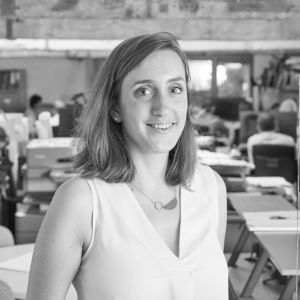 What’s the most important piece of advice you’ve ever been given? “Be yourself and don’t ever stop learning”. This advice continues to hold true to as, being a heritage-focused architect, I’m continuing to develop specialist knowledge, explore, and learn about different architectural styles and materials. I’m also part of a team that continually makes discoveries – these range from finding apotropaic marks in wooden beams to having paint analysis confirm the adaptions and additions to intricate plasterwork.
What’s one message you would send to young women who may be considering a similar career? Architecture can be hugely rewarding, and its heritage side offers a variety of amazing challenges which allow us to consider how things work together and how the immediate setting influences buildings and places. It’s a career which enables us to explore the lives of people who have lived and experienced places as they evolve, and how the functions of these places adapt to show an appreciation of their qualities versus the essentials in everyday modern life.
Is there a woman who’s inspired you during your life? There are many inspiring women, past and present, who I feel fortunate to come across. What makes them inspirational to me is often their philanthropic nature and a driven passion. Take, for example, Ferguson’s Gang – a group formed in 1927 with five core members, all of whom were women. They sought to raise awareness of the need to protect rural areas and supported organisations dedicated to preserving England’s heritage. Aside from the places they saved, their ingenuity and personalities shine through in the eccentricity of their donations – ‘swag’ money collected inside a fake pineapple; a one-hundred pound note stuffed inside a cigar; five hundred pounds with a bottle of homemade sloe gin.
What does International Women’s Day mean to you? It’s a day of gratitude to the women and men who have enabled and supported women in past, and one which ensures this support and contribution is continued for equality and diversity in the future, irrespective of how the challenges may evolve.
How can companies make workplaces more inclusive? Ada Lovelace’s quote, “Strong women. May we know them. May we be them. May we raise them” talks to me about the collaborative approach that seeks to address issues around inclusion. Tapping into all employees’ and other consultants’ knowledge and perspectives can only help make better decisions.
Rebecca Brown, Architect (Placemaking team)
 What do you think organisations should focus on to improve diversity? Although there are lots of women entering architecture at university level, there is still a distinct drop off in those maintaining careers in the industry. This means fewer female bosses or people in senior roles which is really important to having influential female voices in the industry. Issues like having children and the effect it has on your career need to be thought about; from raising maternity pay above the minimum to considering how time away from the profession can stop being a hindrance on progression. We need to make architecture a long-term prospect for women, not just an early career that’s later abandoned.
What’s one message you would send to young women thinking about a career in placemaking? There are lots of us out there! Although the construction industry is still quite male dominated, this is changing all the time. Roughly 50% of my university undergraduate course (started in 2012) members were women compared to around 26% in 1995. So don’t worry that you’ll be the only lady at the table, our numbers are growing all the time.
What’s the most important piece of advice you’ve ever been given? The average person spends 3,515 full days working – which is a long time! Therefore, don’t waste that time doing something boring. Do something you are passionate about!
Tina Hosking, PA and HR Manager (Business Support team)
 Why do you feel it’s important to mark International Women’s Day? As an HR Manager, empowering diversity is an important part of my role no matter what day of the week it is! It’s an area that doesn’t – and shouldn’t – stand still. In my work, whether we’re trialling ‘blind recruitment’ processes, or reviewing the equal opps policy, or carrying out diversity training, there’s always something to focus on. It’s great to have a dedicated day where equality and gender diversity are in the spotlight to highlight progress – past, present and future.
Are there any quotes that inspire you? I’m not sure where it comes from, but I’d echo the saying “If you have a dream, make it a goal”. It’s relevant on both personal and professional levels, and it’s very motivating.
What’s your International Women’s Day message? It’s got to be “Celebrate your uniqueness”. What sets us apart is our individual blend of talents, passions, skills, shortcomings and strengths. It’s definitely a combination that should be valued and is what IWD is all about.