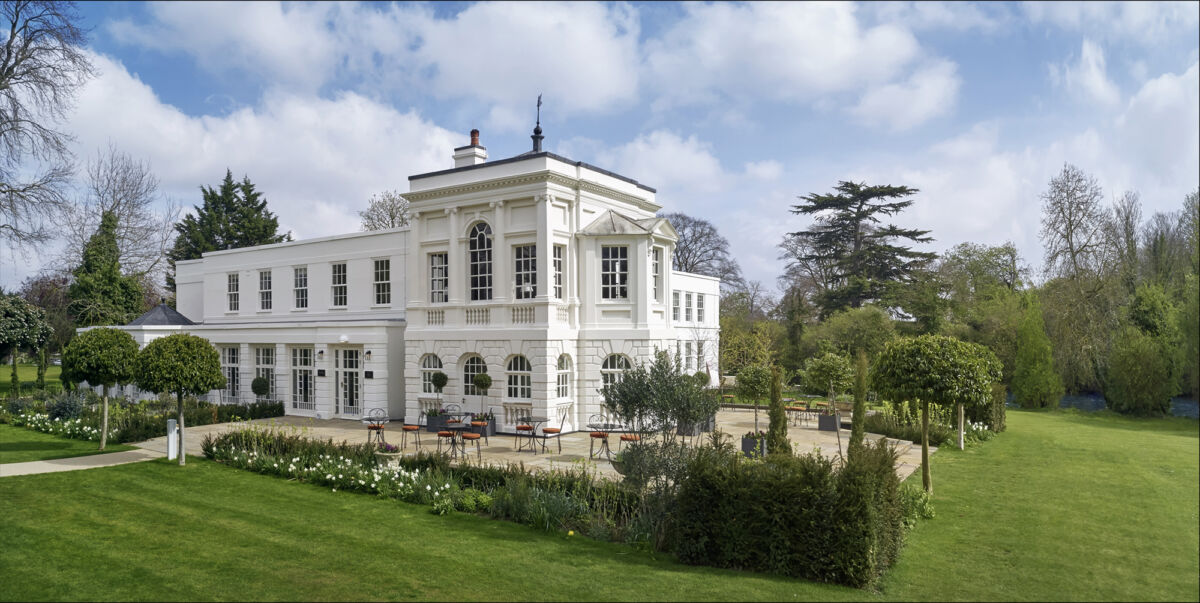
Set across seven acres, the restored Monkey Island Estate is a luxury hotel on a private island in the beautiful village of Bray. The island is home to two grade 1 listed pavilions, which were previously used as a hotel until it closed in 2015.
We were commissioned by the YTL Hotel Group to draw up plans to re-vitalise the existing buildings and provide a new vision to improve operational viability. Given its riverside, green-belt location and blanket grade 1 curtilage listing, this involved many challenges.
Why did we re-use the buildings? To secure the long-term security of this nationally important heritage asset whilst ensuring a sustainable operation for our client, our case centred on bringing the buildings back into use. Our designs also dramatically improve both the hotel’s functionality and the guest island experience alike.
To the rear of one of the listed pavilions, a modern bedroom wing had been added. While this wing had little historic significance and could have been rebuilt, our strategy considered the embedded carbon in the concrete and steel and ultimately involved retaining and reusing it. As well as environmental benefits, this approach also brought cost and time benefits for our client.

Our knowledge of historic buildings was critical for this re-use project. In our analysis of the estate, we discovered that an unusual historic construction technique had been used in the Monkey Room (photo above), where the walls are made from solid teak. As embedded timber can be vulnerable to decay, our knowledge was vital in making the building ready for a warmer and wetter climate by controlling moisture and preventing long-term damage/decay.
How did our client benefit? By re-using the existing buildings, we could ensure the estate’s long-term stability and durability. Our work has also helped reduce the maintenance costs for our client and the need for fabric repairs, bringing with it a longer term carbon saving too.
Given our discovery of the unusual technique used in the Monkey Room, a larger portion of the budget was required to secure the longevity of that area. So as well as bringing environmental benefits, re-using what we could across the estate also made financial sense for our client.
The hotel officially re-opened in April 2019 and was recently named in The Telegraph as one of the 12 ‘grandest British hotels fit for royalty‘.