Bedminster is a community in South Bristol where the town centre is struggling. This is partly due a large fracture zone that results in an inadequate proximate critical mass of population which weakens its relationship with nearby residential neighbourhoods, its station and key assets such as the large Victoria Park.
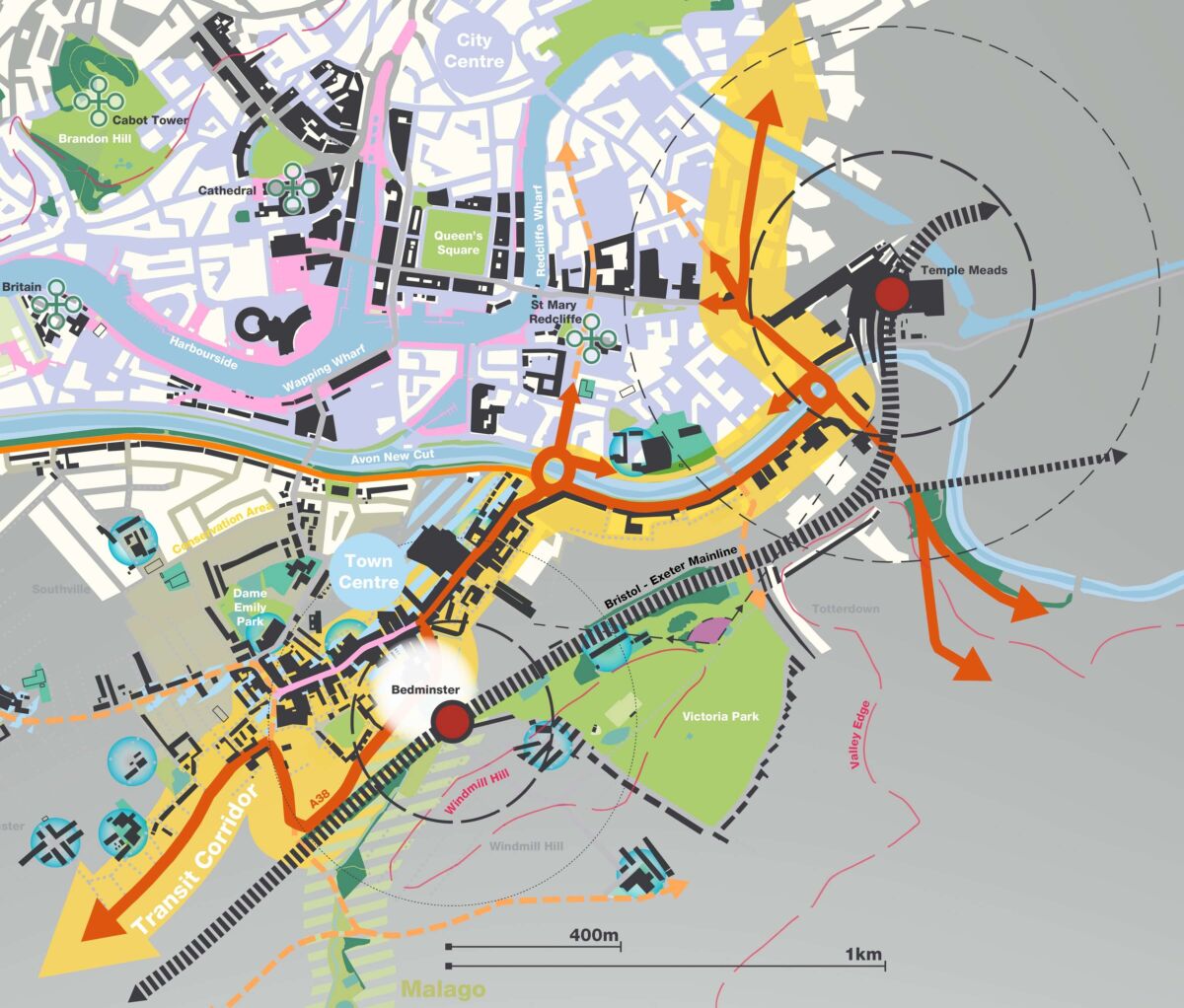
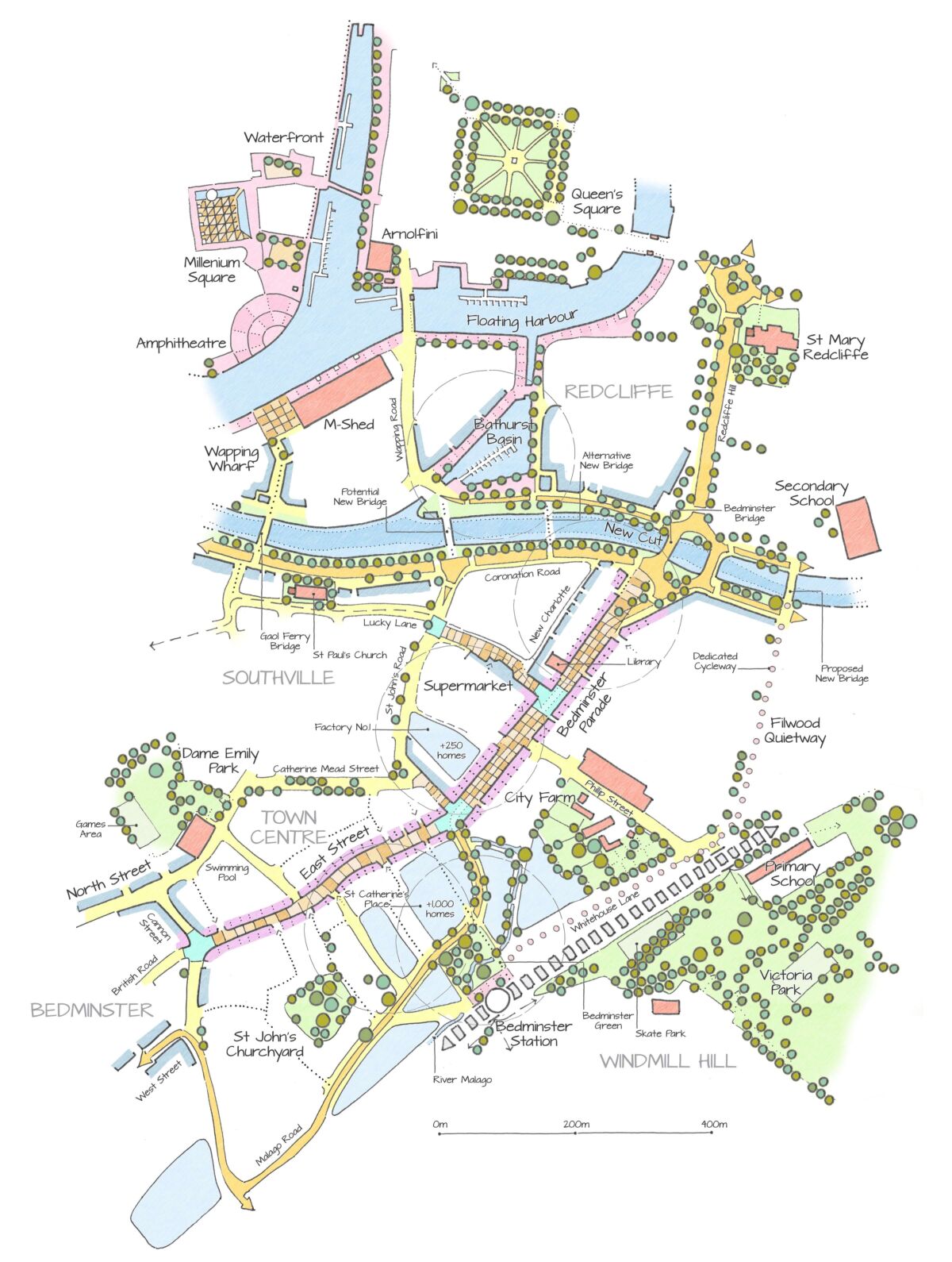
This fracture zone is an area that was historically a high density residential and industrial area. Following war damage and clearance, it became colonised by industrial sheds, yards and car parks. It also accommodates a dated and failing precinct-style shopping centre. As such, it is an area lacking character and a sense of place, more akin to an edge of town environment than the high density and characterful place that would be expected adjacent to the town centre.
It is an area with significant development potential, but risks that this would not optimise its potential if undertaken in a piecemeal process. Notwithstanding this potential, development and enhancement also faces significant challenges. These include the need to relocate uses, issues associated with a culverted river, transport demands and lower development values than other parts of Bristol.
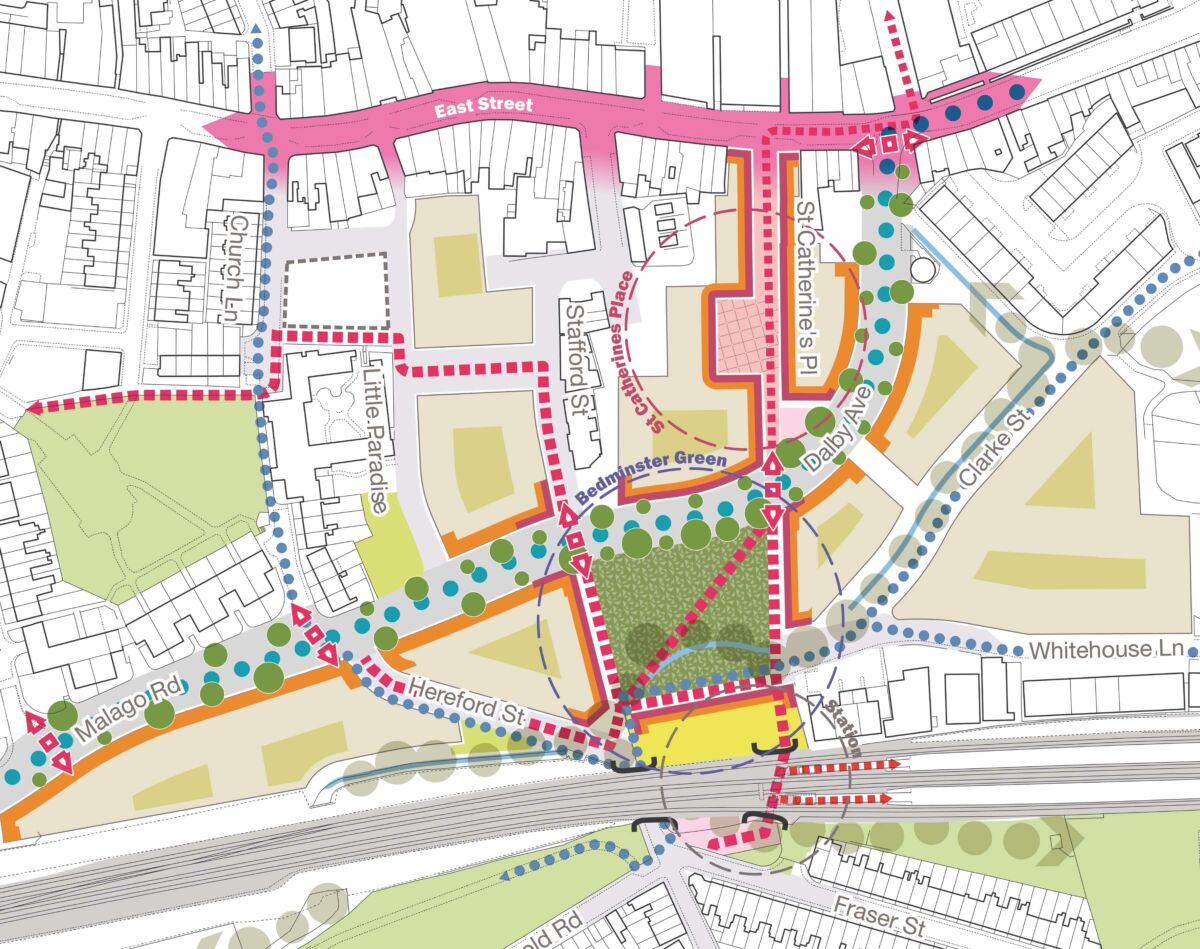
To establish the basis for delivery of a high quality and sustainable new neighbourhood, Nash Partnership prepared a Placemaking Framework, working closely with Bristol City Council and four key landowners/developers – A2 Dominion, Dandara, Deeley Freed and Firmstone. This required strong project leadership and management to navigate a range of interests and develop consensus on the scope and content of the Framework. The process, which was completed in nine months, included a programme of engagement, including councillor, officer and landowner workshops, briefing and discussion with key stakeholders and public drop in sessions.
The Bedminster Green Placemaking Framework sets the basis for a mixed-use new neighbourhood of up to 1,500 homes, retail, café, community, leisure uses, and enterprise uses, new connections, public realm and green infrastructure, a new station entrance and transformation of the shopping precinct.
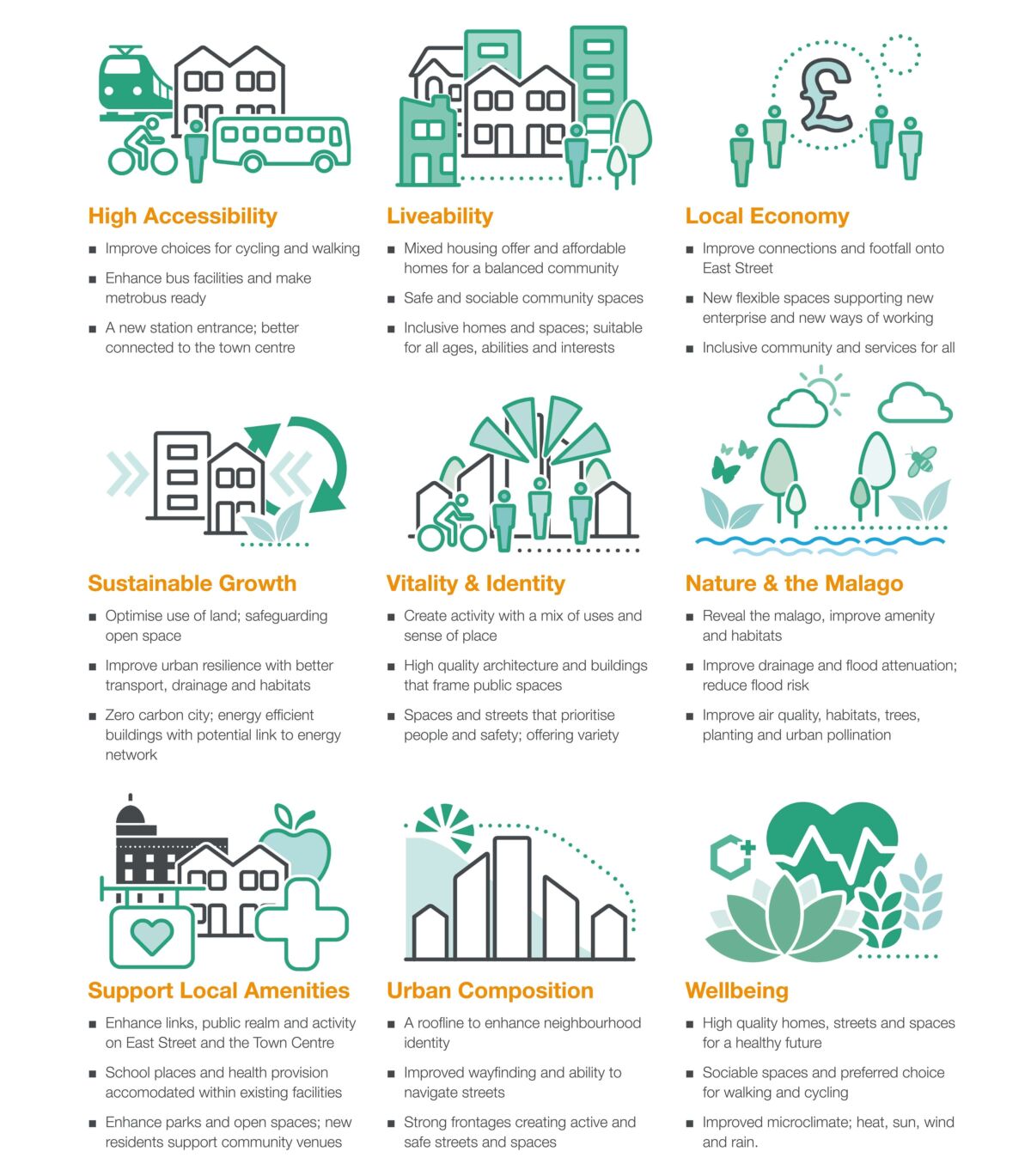
Completed in Spring 2019, the Framework was informed by a series of technical studies, including on transport, flood risk and drainage. It is built on a vision for the area, a set of placemaking principles and associated design parameters and guidance. Following consideration by Bristol City Council’s Cabinet it is now a material planning consideration and provided the basis for agreement in principle of £6m CIL investment and application of a flexible approach to affordable housing to support delivery.

The Placemaking Framework was shortlisted for a 2019 SW RTPI Award.