The South West’s economic resilience and optimism were clear themes at the recent Business of the South West conference hosted by TheBusinessDesk.com in Bristol. Held at the M Shed, the event brought together regional leaders, developers and businesses to discuss the opportunities shaping the future of the region.
For our Design Director John Everett, who attended the conference, the mood in the room reflected a region that has strong reasons to be confident about its future. In particular, the Mayor of the West of England highlighted that the South West’s economy continues to outperform that of many other parts of the UK – an achievement that’s sometimes overlooked but deserves recognition.
The conference also showcased the scale of development activity currently underway across the region. In the context of the Government’s New Towns agenda, one of the most significant housing initiatives in a generation, developers spoke about major regeneration projects including Brabazon, Gravity, Panattoni Park and Golden Valley. There was also notable news for Bristol, with Muse announced as the preferred development partner for Bristol Temple West and St Philip’s Marsh.
Among the initiatives discussed at the conference, the emerging regeneration of St Philip’s Marsh stands out as one of the most significant opportunities shaping Bristol’s future. Our Associate Planner Martin Lee shares his perspective on what it could mean for the wider Temple Quarter.
The next stage for St Philip’s Marsh
The emerging proposals for St Philip’s Marsh provide a valuable opportunity to reflect on the principles that underpin successful regeneration and placemaking in the region. They represent a significant moment for Bristol and the wider Temple Quarter area, which is currently moving through an important stage in its planning process.
Friday 20 February 2026 marked the close of the community engagement and public consultation phase on four draft development options prepared for the joint venture partnership Bristol Temple Quarter LLP. The partnership brings together Bristol City Council, the West of England Mayoral Combined Authority, Network Rail and Homes England, under the leadership of the Mayor of the West of England, Helen Godwin.
A wide range of key landowners across the area have been engaged, including Bristol City Council, Homes England, Network Rail, National Grid, Avon & Somerset Police, Bristol Fruit Market and Avonmeads Retail Park, alongside numerous private and industrial landowners controlling smaller parcels of land.
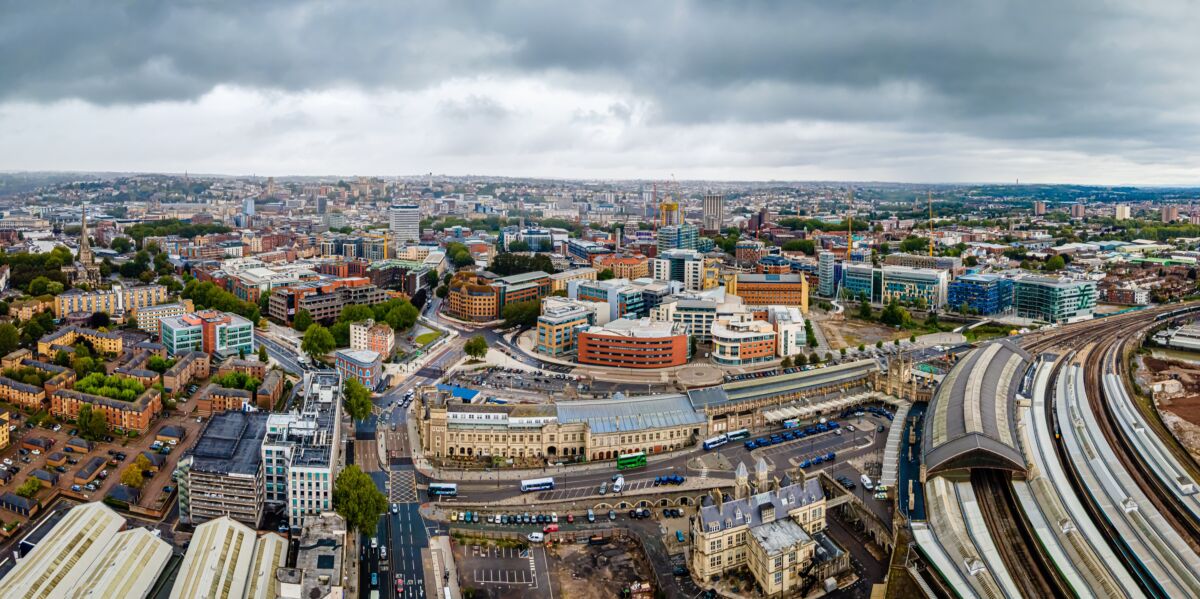
Progressive stages of consultation form an essential part of Bristol City Council’s ongoing process of masterplan production for this major component of Temple Quarter. The masterplan is intended to provide more detailed, area-specific guidance than the broader Temple Quarter Development Framework, responding to the emerging allocations in the draft Bristol Local Plan.
Once finalised, the masterplan will form the core of a Supplementary Planning Document (SPD), to be formally adopted as a supportive Local Plan strategy guiding the redevelopment of St Philip’s Marsh under policies DS2 and DS3.
Lessons from Bedminster Green?
Just a couple of miles away from St Philip’s Marsh is Bedminster Green – an area which provides a useful point of reference for regeneration projects of this scale.
Here, Nash Partnership worked closely with Bristol City Council and four key landowners/developers to produce the Bedminster Green Placemaking Framework.
The published framework shows a clear basis for the delivery of a high quality and sustainable, mixed-use neighbourhood of up to 1,500 homes, alongside retail, cafe, community, leisure and enterprise uses, improved connectivity, public realm and green infrastructure enhancements, plus a new station entrance and shopping precinct transformation. The framework was a finalist in the 2019 RTPI SW Awards for Planning Excellence.
The principles underpinning that framework – creating connected neighbourhoods, embedding mixed-use vitality, prioritising public realm and delivering meaningful green infrastructure – are just as relevant to the future of St Philip’s Marsh.
What the community wants
Back in St Philip’s Marsh, the results of engagement so far show there are strongly expressed desires for:
- A centrally located community hub with pedestrianised streets connecting to the residential and commercial zones, Temple Meads and beyond to the city centre
- Substantially increased green space provision, potentially tripling that which might be provided by simply reinvigorating Sparke Evans Park within its existing boundaries and preserving existing areas of small woodland plus new tree planting along streets.
Encouragingly, redevelopment activity is already underway in parts of the area, including around Silverthorne Lane. As the masterplan continues to evolve, St Philip’s Marsh represents a major opportunity to translate the region’s economic growth into a new piece of city – one shaped not only by development, but by thoughtful placemaking.
– By Design Director John Everett and Associate Planner Martin Lee